
The Strength Question Pilates Research Has Never Actually Answered
When Pilates is dismissed as not being strength training, the dismissal is typically stated with confidence. What is rarely stated is that the study to prove it has never been done. The research most relevant to this question has examined mat-based or modified Pilates protocols — not the full Classical apparatus-based system Joseph Pilates designed. Conclusions are being drawn from evidence that was never designed to test the question being answered.
Pilates may be one of the most misunderstood—and least understood—forms of physical training in modern exercise culture. Joseph Pilates’ method is layered, demanding, and deeply intelligent, yet its depth often reveals itself only to those who have practiced it beyond the surface. Over time, this intelligent complexity has been flattened into simplified labels that fail to capture the method’s rigor and sophistication. Pilates resists easy categorization, and that resistance is precisely its strength.
Today, Pilates is frequently marketed as stretching or toning, framed as core-focused, low-impact, rehabilitative, dancer-inspired, or described as creating “long, lean muscles”—a common marketing phrase rather than a distinct physiological adaptation—often positioning Pilates as complementary to traditional strength training rather than a form of strength itself. While each of these labels captures a narrow aspect of the method, none accurately reflects the method as a whole. Over time, this framing has shaped public perception, positioning Pilates as aesthetic or wellness-oriented rather than as serious physical conditioning.
This interpretation stands in contrast to the method’s original intent. Joseph Pilates termed his system Contrology and presented it as a comprehensive approach to physical conditioning designed to cultivate strength, vitality, and resilience across the lifespan. In Return to Life Through Contrology and related publications issued through the American Foundation for Physical Fitness, Pilates consistently emphasized physical fitness, uniform development of the body, and functional capability—not cosmetic outcomes, or gentle exercise.
To suggest that Pilates is not strength training at all is physiologically inaccurate and scientifically oversimplified. The more precise question is not whether Pilates resembles traditional resistance training, but whether it has been appropriately evaluated within that framework. What happens when the two are studied side by side — and more importantly, what does it mean that the right study has never been done?
A small number of studies have compared Pilates to resistance-based programs, particularly in older adult populations. Across these trials, Pilates groups frequently demonstrate meaningful improvements in strength-related and functional outcomes. Measures such as trunk and hip strength, balance, and mobility tests often improve following Pilates training, sometimes in ranges similar to resistance training comparators. For example, Carrasco-Poyatos and colleagues conducted an 18-week randomized controlled trial in older women comparing Pilates to resistance training; both groups improved physical function, with Pilates favoring isometric trunk and hip extension strength and resistance training favoring isokinetic outcomes.
To clarify what has actually been tested, the table below summarizes identified studies that directly compared Pilates-based interventions to resistance or strength-based programs. Rather than focusing only on outcomes, it identifies what was operationalized under the label “Pilates” in each trial—how exercises were structured, what equipment was used, and how closely the intervention resembled the Classical system.
In this context, Classical Pilates refers to the method as originally designed by Joseph Pilates: a comprehensive training system defined by a specific repertoire, specialized apparatus, and purposeful sequencing intended to develop strength, coordination, and control over time. Classical does not imply rigid. Exercises are personalized to the individual based on the needs, abilities, and stage of life of the practitioner. What remains consistent is the integrity of the system —the order, and structural progression through which the method develops strength and capacity.
| Study (Author, Year) | Population (n) | Pilates Type | Apparatus Used | Instructor Training | Length of Study | Sessions / Week | Comparison Intervention | Outcomes Measured | Key Results |
|---|---|---|---|---|---|---|---|---|---|
| Martin et al., 2013 Improving muscular endurance with MVe Fitness Chair in breast cancer survivors: A feasibility and efficacy study | Female breast cancer survivors (n = 26) | Chair - Pilates inspired (Non-Classical) | MVe Fitness Chair | Exercise Science - No Pilates credential reported | 8 weeks | 2–3× | Traditional resistance training (TRT) - listed exercises | Muscular endurance | Both groups improved muscular endurance; no significant difference" |
| Carrasco-Poyatos et al., 2019 Pilates versus resistance training on trunk strength and balance adaptations in older women: A randomized controlled trial | Older women, ages 60–80 (n = 60) | Mat — Pilates-Inspired, Modified Classical Exercises (props) | Chi ball, bands | Personal trainer with Pilates certification - Pilates credential not reported | 18 weeks | 2× | Progressive Resistance Training (PRT) - listed exercises | Trunk and hip isometric and isokinetic strength, static and dynamic balance | Pilates improved isometric strength more; RT improved isokinetic strength more; balance improved in both groups |
| Pucci et al., 2021 Effect of Resistance Training and Pilates on the Quality of Life of Elderly Women: A Randomized Clinical Trial | Older women, ages 60–84 (n = 41) | Mat — Pilates-Inspired, Modified Classical Exercises (props) | Swiss ball, dumbbells | Physical education professional trained in Pilates — credential not reported | 12 weeks | 2× | Progressive Resistance Training (PRT) — listed exercises | Quality of life | Quality of life improved in both groups |
| Rathi et al., 2024 Effect of Pilates versus resistance training on physical fitness in older adults | Older adults, ages 60–75 (n = 47) | Mat — Pilates-Inspired (Non-Classical) | None | Not reported | 6 weeks | 3× | Progressive Resistance Training (PRT) — listed exercises | Strength, flexibility, endurance, body composition | RT superior for muscle strength and endurance; Pilates superior for flexibility and cardiorespiratory endurance; no significant difference in body composition |
About this Table: the studies summarized here were selected because they directly compare a Pilates-based intervention to a conventional resistance or progressive resistance training program. Studies comparing Pilates to other modalities — balance training, specialized devices, or multicomponent programs — were not included, as they address a different question. This is not a systematic review. It is an evidence summary designed to illustrate what has and has not been tested within the specific context of Pilates and strength training.
Viewed collectively, the studies summarized above reveal the central gap in this conversation. Claims that Pilates is not strength training are often made as though Classical Pilates has been tested head-to-head against progressive resistance training and found lacking. That study does not exist. None of the available comparative trials evaluate the full Classical apparatus system, original sequencing, long-term progression, or comprehensively trained Classical instruction as a standardized intervention. Instead, the comparative literature relies almost entirely on mat-based or modified Pilates protocols.
In exercise science, strength training is defined as training that improves the body’s ability to produce force. Strength is an adaptation to resistance and progressive demand—not a function of any specific equipment. While resistance training often increases load through external weights, resistance can also be applied through springs, lever mechanics, controlled eccentric loading, trunk stabilization under tension, and increasing neuromuscular complexity (ACSM, 2021; NSCA, 2016).
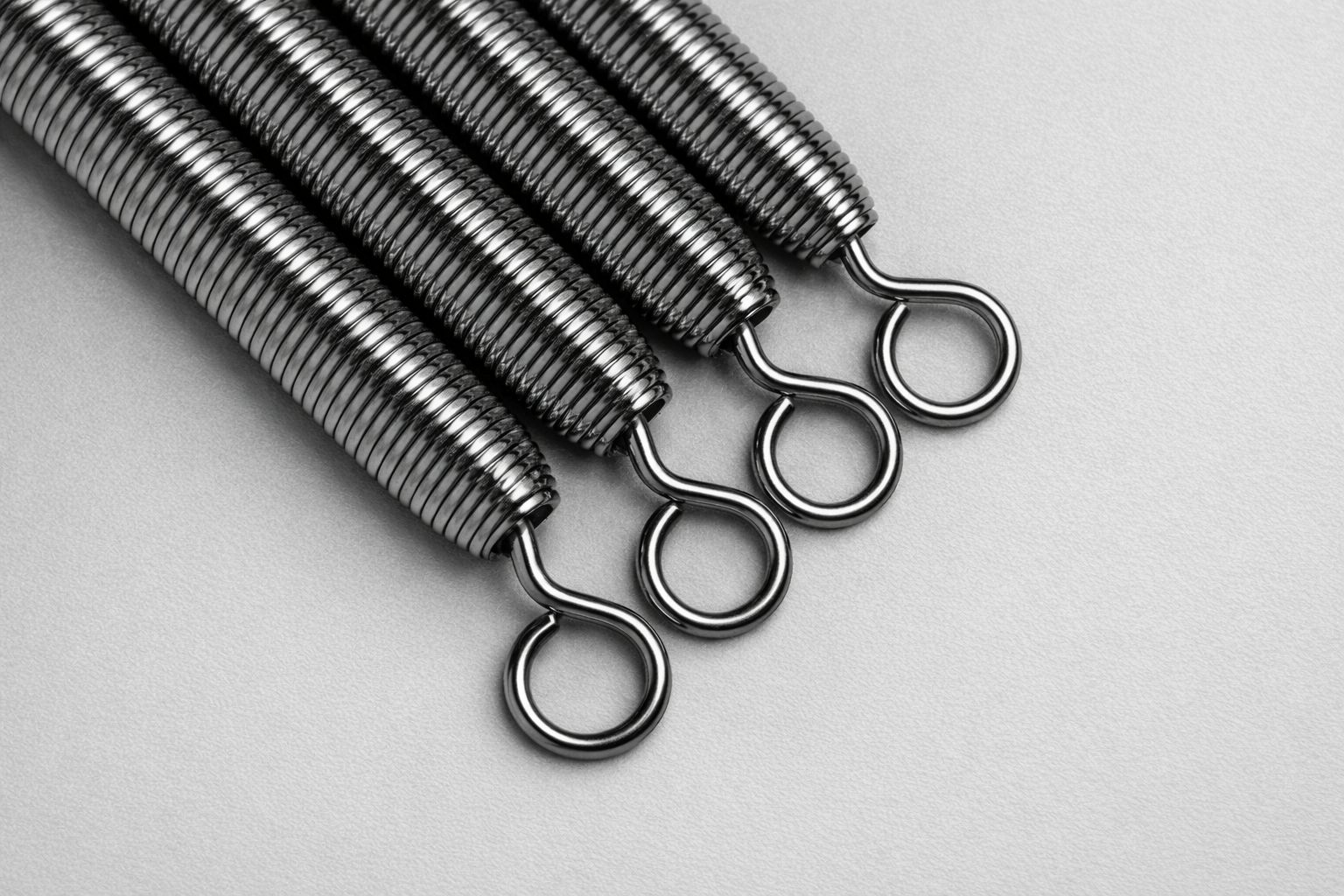
Classical Pilates operates within these same physiological principles. It is not simply a mat workout. The mat repertoire represents an advanced expression of a system built through apparatus-based loading. Springs, leverage, and purposeful sequencing develop the strength and control required to execute the mat at a high level. Progression occurs not by adding external weight, but through longer levers, greater control demands, layered spring resistance, and increasingly complex movement integration.
Because the full apparatus-based Classical system has not been evaluated within a strength-training framework, definitive conclusions about its strength-training capacity cannot yet be drawn. What can be said, however, is that existing comparative studies—despite relying largely on mat-based protocols—consistently demonstrate strength-related and functional improvements.
Progressive resistance training has a robust and well-established evidence base for strength development, bone preservation, and healthy aging. That evidence should be respected. But excluding Pilates from the strength category on the basis of incomplete study design is not scientifically justified. The issue is not superiority. It is classification. Classical Pilates has not been tested as the comprehensive, apparatus-based resistance system it is.
The science has not yet caught up to the method. It has barely asked the question correctly. Even the simplified, mat-based protocols studied under the Pilates label consistently produce strength-related and functional improvements. The full Classical system — apparatus-based, progressively loaded, purposefully sequenced — has never been tested as a strength training system. That means practitioners and teachers do not need to defend Pilates against a body of evidence that found it lacking. No such evidence exists. What exists is a gap — between a loud conversation and an incomplete science. Until that gap is filled, the defensible position is clear: Classical Pilates cannot be excluded from the strength training category on the basis of research that never evaluated it.
References
Carrasco-Poyatos, M., Ramos-Campo, D. J., & Rubio-Arias, J. A. (2019). Pilates versus resistance training on trunk strength and balance adaptations in older women: A randomized controlled trial. PeerJ, 7, e7948
https://doi.org/10.7717/peerj.7948
Martin, E., Battaglini, C., Hands, B., & Naumann, F. (2013). Pilates on a fitness chair versus traditional resistance training: Effects on physical fitness in breast cancer survivors. Journal of Science and Medicine in Sport, 16(2), 131–136.
https://doi.org/10.1016/j.jsams.2012.08.012
https://pubmed.ncbi.nlm.nih.gov/23026681/
Pucci, G. C. M. F., Neves, E. B., Santana, F. S., Neves, D. A., & Saavedra, F. J. F. (2021). Effect of resistance training and Pilates on the quality of life of elderly women: A randomized clinical trial. Revista Brasileira de Geriatria e Gerontologia, 23(5), e200283.
https://doi.org/10.1590/1981-22562020023.200283
Rathi, A., Muthiyan, K., Joshi, R., & Gazbare, P. (2024).
Effect of Pilates versus resistance training on physical fitness in older adults. Advances in Physical Therapy.
http://www.antpublisher.com/index.php/APT/article/view/743/930
Foundational and Position References
American College of Sports Medicine. (2021). ACSM’s guidelines for exercise testing and prescription (11th ed.). Wolters Kluwer.
National Strength and Conditioning Association. (2016). Essentials of strength training and conditioning (4th ed.). Human Kinetics.
Pilates, J. H., & Miller, W. J. (1945). Return to Life Through Contrology. J.J. Augustin.
Pilates, J. H. (1957). Return to Life Through Contrology (pamphlet). American Foundation for Physical Fitness.
This reference list reflects the studies discussed in this article and is not an exhaustive review of all Pilates-related research.